
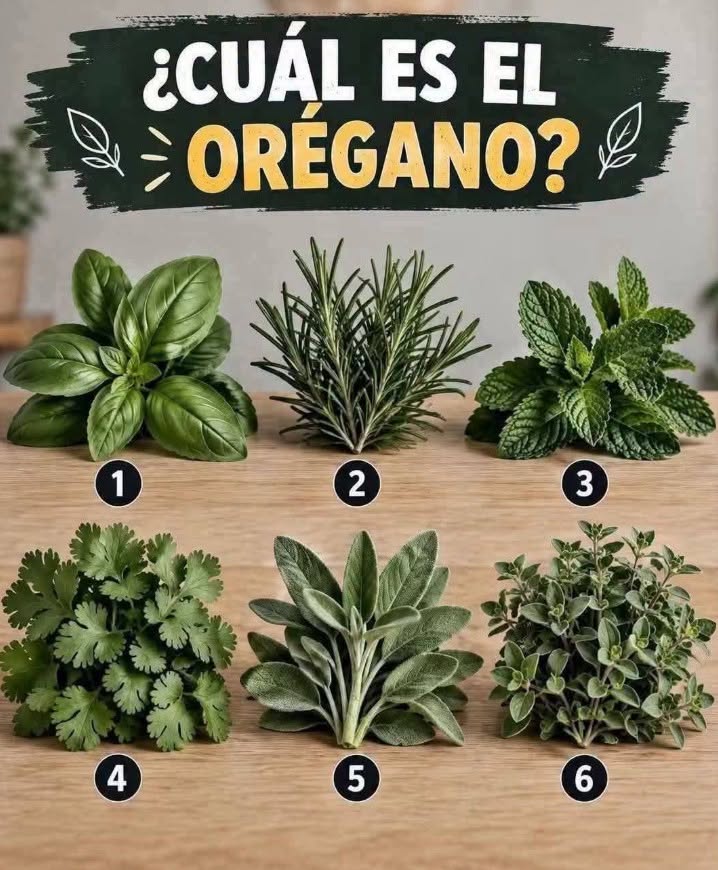
Which of these herbs is oregano?
If you have ever stared at fresh green leaves in a garden or market shelf feeling unsure, you are not alone!
The correct answer in the image is Number 6.
Knowing how to identify oregano correctly allows you to unlock both its vibrant culinary value and powerful natural remedies.
Visual Breakdown: Which of These Herbs Is Oregano?
To properly identify which of these herbs is oregano among similar culinary plants, look closely at physical leaf characteristics, stem structure, and aroma profiles:
Basil (Number 1): Features large, glossy, smooth, vibrant green leaves that are slightly curved downward with a sweet, aromatic fragrance.
Rosemary (Number 2): Identified by distinct needle-like leaves attached to woody stems, offering a piney, resinous scent.
Mint (Number 3): Characterized by deeply textured, veined leaves with pronounced serrated edges and a cooling, sharp menthol aroma.
Cilantro/Parsley (Number 4): Displays delicate, fan-shaped, flat, deeply lobed leaves growing on thin, tender stems.
Sage (Number 5): Features elongated, velvet-textured, grayish-green leaves with a prominent peppery, earthy scent.
Oregano (Number 6): This is the true oregano! It forms small, oval, slightly fuzzy green leaves growing tightly on woody, reddish-brown stems, giving off a warm, peppery, aromatic scent.
Botanical Principles: How Oregano Works and Its Identification Traits
When learning which of these herbs is oregano, understanding basic botanical structure helps immensely. Oregano (Origanum vulgare) belongs to the Lamiaceae (mint) family, which explains its square stems and paired, opposite leaf arrangements.
Unlike soft leafy herbs like cilantro or basil, real oregano exhibits small, sturdy, egg-shaped leaves that feel slightly textured under your fingertips. The leaves release a concentrated burst of essential oils containing bioactive compounds like carvacrol and thymol when crushed.
Health Benefits and Medicinal Advantages of Real Oregano
Spotting which of these herbs is oregano gives you direct access to one of nature’s most potent botanical remedies. Beyond adding rich Mediterranean flavor to cooking, authentic oregano offers remarkable wellness properties:
Potent Antioxidant Activity:
Packed with polyphenols that combat oxidative stress in body tissues.
Natural Antimicrobial Support: Active compounds like carvacrol help inhibit harmful pathogens and microbial growth.
Digestive System Aid: Stimulates bile flow and supports healthy gut microbiota function.
Respiratory Comfort: Soothes airways when consumed in warm herbal infusions during seasonal changes.
Managing daily wellness through natural remedies reduces reliance on unexpected stress, much like carrying reliable auto insurance shields you against unexpected life events.
Common Identification Mistakes and Safety Precautions
Mistaking another herb for oregano can alter both your recipe’s flavor profile and its therapeutic effects. Here are crucial mistakes to avoid:
Confusing Oregano with Marjoram: While closely related, marjoram has a sweeter, much milder flavor without oregano’s characteristic spicy bite.
Misidentifying Wild Varieties: Certain wild plants resemble oregano visually but lack culinary safety or therapeutic potency.
Overusing Concentrated Oils: Pure oregano essential oil is extremely concentrated and must always be diluted in carrier oils before topical or oral application to prevent skin or digestive irritation.
Key Botanical Facts: Oregano at a Glance
Botanical Name: Origanum vulgare
Plant Family: Lamiaceae (Mint Family)
Primary Bioactive Compounds: Carvacrol, Thymol, Rosmarinic Acid
Key Visual Features: Small oval leaves, fuzzy surface, reddish woody stems
Aroma Profile: Pungent, herbaceous, warm, slightly bitter
Preservation, Drying, and Storage Tips for Fresh Oregano
Once you know which of these herbs is oregano, keeping it fresh ensures maximum flavor and medicinal potency:
Fresh Storage: Bundle whole stems together, wrap the bases in a damp paper towel, and place them inside a breathable container in your refrigerator for up to 10 days.
Air Drying Method: Tie stems in small bunches and hang them upside down in a warm, dry, well-ventilated room away from direct sunlight for 1 to 2 weeks.
Storage Containers: Strip dry leaves from stems, store them whole in airtight glass jars, and keep them in a dark cabinet to preserve essential oils for up to 1 year.
Frequently Asked Questions
Comments
Post a Comment