
Lady Dumps Baking Soda Down Her Sink: Here’s the Practical Reason Why
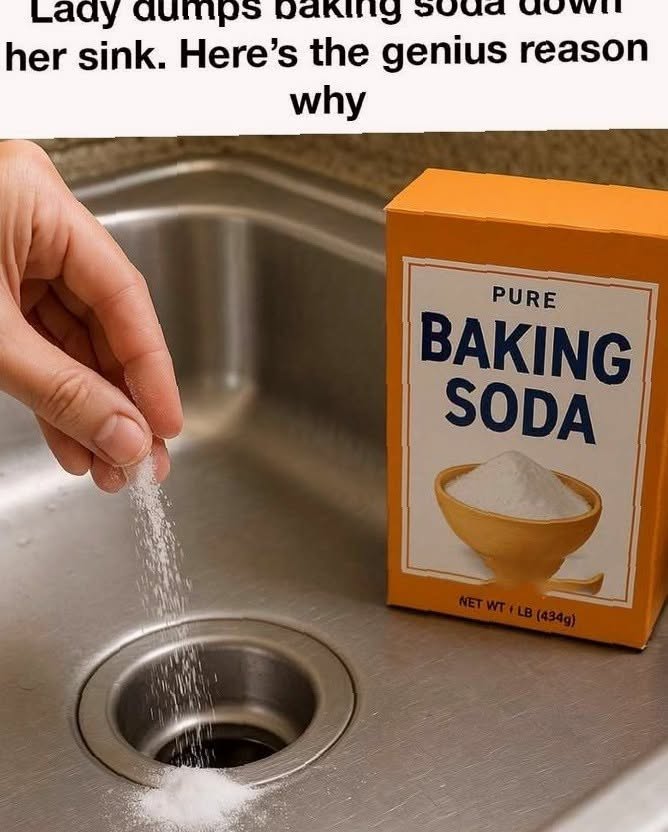
Baking soda is one of those inexpensive household staples that seems to have an endless list of uses. Most people keep it around for baking or perhaps for absorbing odors in the refrigerator, but it can also be surprisingly useful around the kitchen sink.
Sprinkling baking soda into a sink and around the drain can help loosen greasy residue, reduce certain unpleasant odors, and gently scrub away everyday grime without immediately reaching for a strong commercial cleaner.
But there is an important distinction: baking soda can be useful for routine cleaning and minor buildup, but it is not a magic solution for a seriously clogged drain.
Understanding what it actually does—and how to use it correctly—can make this simple household trick much more effective.
Why Put Baking Soda in the Kitchen Sink?
The kitchen sink handles food
oils, sauces, coffee, dirty dishes, and countless other substances every day.
Even when you rinse the sink regularly, small amounts of residue can remain on the surface and inside the drain.
Over time, this buildup may contribute to:
Unpleasant drain odors
A greasy film around the sink
Dull-looking stainless steel
Residue around the drain opening
Slow drainage caused by minor buildup
Baking soda can help with several of these everyday maintenance problems.
What Exactly Is Baking Soda?
Baking soda is sodium bicarbonate, a mildly alkaline compound.
Its chemical and physical properties make it useful for household cleaning in two main ways.
First, the fine powder provides gentle abrasive action. When rubbed across a suitable surface with a damp sponge, it can help loosen stuck-on residue without the aggressive scratching associated with some harsher abrasives.
Second, sodium bicarbonate can react with acidic compounds, which helps explain its usefulness for neutralizing
scraps,
Comments
Post a Comment